Showing posts with label comedy. Show all posts

Thursday, July 21, 2011

Life With Father (1947)

About 20 mintues into the movie, Clarence (William Powell) storms into an agency that hires out maids demanding, "Where do you keep 'em?" You see, just a few minutes earlier Clarence had scared away the most recent maid in a long line of scared maids. The woman manning the agency desk tries to prevent Clarence from rushing into the room with the maids. When she fails, and he picks which maid he wants, the woman explains that she needs to know the character of the house to which the maid will be going before she can allow her to go anywhere with him. The reply: "Madam, I am the character of my home!" And here we have the main source of comedy and conflict in the movie. Clarence is a character.
It is currently somewhere between 90 and 100 degrees outside and probably close to that in my apartment. I cannot think. I can barely move. I needed a funny movie to distract me. Unfortunately, this movie did not distract me. There is perhaps a reason I had not heard of it before I found it in Netflix's instant watch list. Many jokes were made, but they were often just too corny to laugh at. Two masters of witty dialogue and comic timing wasted.

Once Elizabeth Taylor, as a wide-eyed, bonnet-wearing young maiden, started asking Clarence Jr. if he believes in girls going to college, I decided never mind the temperature, I needed to at least be knitting so I could handle the rest of the movie. Then, during the whole to-do about how Elizabeth Taylor's character is a Methodist and the members of Clarence's family are Episcopalian and the ensuing drama about the discovery that Clarence was never actually baptized as a child, I started to pay more attention to my knitting than to the movie. But then I started to think, if only this movie ends with William Powell in a long frilly white gown getting baptized, maybe I will laugh.

To be fair, though, I did chuckle a few times throughout the movie:

*"You know your father doesn't like electricity!" (There were a lot of things Father (Clarence) didn't like, from kneeling in church to rubber plants.)

*"Do you ever play duets?"
"No, not till now."
"Neither have I, not till now." (Was this exchange between Elizabeth Taylor and Clarence Jr. meant to be funny? I'm really not sure.)

*Clarence discussing his pew and its falling property values with the minister and his wondering when it might be best to unload it.

*Clarence Jr. believing he is possessed by his father's old suit and not being able to do anything his father wouldn't do while he wears it. Elizabeth Taylor cannot sit on his lap, because it would be like she is sitting on Father's pants.

I cannot forget William Powell in this movie after puzzling over his bright red Technicolor hair for almost two hours, but from this moment on, I will do my best to forget Irene Dunn's part as his wife. In other words, one star, and I don't plan to see this again. I need a funny and GOOD movie!

Thursday, April 21, 2011

To Be or Not to Be (1942)

A World War II comedy set in Poland complete with a play about Nazis, real invading Nazis, and actors in their Nazi costumes trying to get the real Nazis to think that they are Nazis, too. Funny movie. The acting troupe at the center of this movie is about to have their first performance of a play about Nazi Germany, despite some disputes amongst the actors. For example, "Heil myself," while deemed great for a laugh by the actor playing Hitler, is believed by the director to be un-Hilter-like. Unfortunately, the play is shut down, because the Polish war board is afraid the play will offend Hitler. When the Nazis invade, though, the costumes and sets of the canceled play come in handy in unexpected ways.
When the Nazis invade Poland, the acting troupe is in the middle of its own drama. It is performing Hamlet with husband and wife stars Maria and Joseph Tura (Carole Lombard and Jack Benny) in the lead roles. Maria has been recently introduced to a young aviator who has been to see all her shows. He's been sneaking back to her dressing room to talk with her every night when her husband goes into his "To be or not to be..." soliloquy. Joseph has noticed the audience getting up to let someone out, but has not yet put the pieces together. He just thinks he has experienced "What every actor dreads... Someone walked out on me." Joseph is spared from finding out about his wife's admirer by the announcement of war. The young aviator goes of to war...
The real hilarity begins when the young aviator discovers that a German spy is on his way to Poland to give the names of important resistance leaders to the Gestapo. The aviator returns to Poland (by plane and parachute) and enlists the help of Maria in foiling the spy. With Joseph's permission of course:

Josef Tura: Wait a minute. I'll decide with whom my wife is going to have dinner and whom she's going to kill.
Maria Tura: Don't you realize Poland's at stake?
Lieutenant Sobinski: Have you no patriotism?
Josef Tura: Now listen, you... first you walk out on my soliloquy and then you walk into my slippers. And now you question my patriotism. I'm a good Pole and I love my country and I love my slippers.

Enter many mistaken identities and rescue attempts. One of the best scenes involves a dead man and a false beard. I would definitely see this movie again, but it's probably only a two star movie... But who cares. One star for Carole Lombard, who was a funny funny lady, one star for the false beard scene, and one more for being so quotable. Three stars! "You can't have your cake and shoot it too."


Wednesday, September 22, 2010

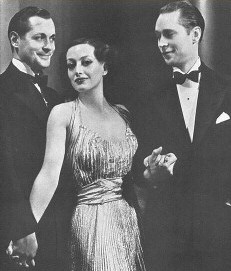
Mr. & Mrs. Smith (1941)

A Hitchcock slapstick comedy... fascinating. Hitchcock's only comedy... I can kind of see why. Having said that, the movie wasn't un-funny, it just didn't live up to my slapstick expectations. It kept falling short. Carole Lombard is fantastic with slapstick (Nothing Sacred), but there wasn't enough for her to do here.

When we meet Mr. and Mrs. Smith (Carole Lombard and Robert Montgomery) they are holed up in their bedroom. One of the rules of their marriage is, "You are not allowed to leave the bedroom after a quarrel unless you've made up," and they had a fight two days ago. While the help watches for them to emerge and Mr. Smith's law firm panics over his absence, Mr. and Mrs. Smith finally reconcile, agreeing that their rules for marriage have once again helped them to trust and love each other. Before Mr. Smith leaves for work, though, Mrs. Smith reminds them of their "no lying" rule, and asks Mr. Smith to honestly tell her whether he would marry her all over again. Mr. Smith very naively answers that although he loves her, if he had it to do all over again, he would hold onto the single life. Oops.

Upon arriving at work, Mr. Smith is then visited by a lawyer come to tell him that, guess what, his marriage license isn't valid. It turns out all people who got married in 1937 in Nevada with an Idaho license are not really married and that "it'd be better if everybody kind of got married again...to be on the safe side." Oops again. Mr. Smith is kind of excited about the idea of dating his wife again and doesn't seem to plan to tell her right away. The lawyer happens to be a family friend of his wife, though, and stops by to see her next. Mrs. Smith's mother is horrified, demanding that her daughter not spend another night with her husband until things are righted. Mrs. Smith is convinced that, despite the morning conversation, of course her "husband" will whisk her off to City Hall that very night after dinner. Otherwise: scandal.
But, the dinner doesn't live up to expectations, and there is no proposal. Instead, Mr. Smith tries to lure his "wife" into the bedroom. Horror! Mrs. Smith tells him what she knows and accuses him of having tried to use her "and then throw me away like a squeezed lemon." Mr. Smith is banished to a room at the men's club, and Mrs. Smith decides that maybe she would like to date other men. Mr. Smith spends the rest of the movie trying to win his wife back. At one point he even tells her, "From now on we're just friends." Her response:"Not necessary."

The favorite scene for both me and David involved Mr. Smith pretending to be deep in conversation with a pretty lady seated near him in a restaurant. Not only is his wife not jealous, but the pretty lady eventually turns around and notices the creep pretending to whisper in her ear. The scene below was pretty funny, too:
So all in all, only two stars, but I would probably watch this again, and I think all Hitchcock fans should be aware of his venture into slapstick.

Thursday, May 13, 2010

Nothing Sacred (1937)

Now I'm a fan of Carole Lombard. She's very funny. All the information that came along with this movie described it as a "screwball comedy," and it very much is, despite the fact that when we first meet Carole Lombard's character, Hazel Flagg, we think she is dying of radium poisoning.

Frederic March plays Wally Cook, a somewhat disgraced newspaper man who goes off to to redeem himself by finding the next big story... the story turns out to be bringing the ailing Hazel to New York City to show her the time of her life before she dies. New York loves Hazel...too bad she's not really sick.
We find out that Hazel isn't really sick pretty early on in the movie. When Wally comes to find her in her small Vermont hometown, Hazel has just learned from her doctor that he made a mistake with her diagnosis. Rather than being overjoyed at not being on her death bed, Hazel is disappointed to have to give up a trip to New York that she had been promised as a last wish. Then comes Wally offering her an amazing chance to be pampered in the city...

The Vermont scenes were a lot of fun. The townspeople do not appreciate a city newspaper man invading their space. He gets a lot of nasty looks, including a nasty look from the actress who played the Wicked Witch of the West in The Wizard of Oz. At one point, while Wally is walking down the street trying to find Hazel, a little boy runs out of his yard, bites Wally on the leg, and runs away again. Biting townspeople?

Just as much hilarity occurs in New York... of course Hazel and Wally fall for each other, and this leads Hazel to feel really guilty about pretending to be dying. So guilty she even tries to fake a suicide so she can remove herself from the situation. The only part of the "screwball comedy" I wasn't so fond of was the punching that went on between Wally and Hazel when Wally found out about the hoax. Don't punch people! Or spank people! "Give me your word of honor you won't try that again, or I'll spank your little..."
Two stars, but I would definitely see this again. Really, it was a very entertaining movie.

Sunday, April 25, 2010

Flying Down to Rio (1933)

Ah, movies from the thirties. This is what I should be watching more of. Roger (Gene Raymond) is the conductor of a band and quite a player. When he spots Belinha (Delores Del Rio) winking at him from her table during a performance, it doesn't take him very long to leave the conducting to Fred (played by Fred Astaire) and sweep her up into his arms for a dance. News travels fast throughout the hotel. When the first comment, that Belinha, the niece of a wealthy Brazilian woman, is dancing with a musician, eventually reaches Belinha's aunt, the comment has run through the rumor mill and turned into "Belinha is dancing with a gigolo." The aunt rushes down to the dining room to put an end to the dance, and a romance/battle of words has begun. I was loving the movie... the first pairing of Fred Astaire and Ginger Rogers, funny banter, amazing hats...
I was so happy... until I got to the spanking and the racism, all of which happened within a span of about five minutes. I will explain:

The spanking: Belinha needs to get home to Brazil fast. Her father needs her. It just so happens that Roger is a pilot, and that he and the band already happen to be going to Rio to play at the opening of a new hotel there. Roger convinces Belinha to fly in his two person plane (although he at first doesn't tell her he is the pilot and disguises himself in his flying gear so her aunt will let her go with him). Belinha is perfectly happy to discover that Roger is the pilot, but when Roger has to make an emergency landing on what they believe to be a remote desert island, all turns sour between them. Roger makes his engine trouble last by purposely losing an essential hose. Then he plays romantic music to get Belinha to make out with him. And then... she says something along the lines of, "No no no...I cannot do this...My family has arranged a marriage for me...I am engaged...We must never see each other again." Roger doesn't take well to Belinha's protest, Belinha slaps him, and then he throws her over his knee and spanks her a whole bunch of times reprimanding her for telling him off. Needless to say, when they have to spend the night on the island, she stays far away from him.

The racism: The morning after the spanking, Belinha looks into the trees and sees four or five black men looking back at her. She runs into Roger's arms screaming about wild men and cannibals. When Roger goes back to investigate, he finds out that she was not seeing cannibals, she was just seeing resort employees. They are in Haiti right next to a golf resort. This was supposed to be a funny joke.

The rest of the movie did have more entertaining moments, though. The hotel happens to be owned by Belinha's father, Roger happens to be friends with the fiance, and Fred Astaire and Ginger Rogers dance, all while Roger and Belinha spar and can't take their eyes off of each other.
The best part of the movie was definitely when the band saves the hotel by creating the most spectacular opener ever: scantily clad girls dancing and doing acrobatics on the wings of planes in flight. At one point some of their clothes are even carried off by parachutes. At one point one girl almost plummets to her death and has to be caught by people on the plane below. Video below:
I also love the way in which Belinha's fiance finally gives her up...a parachute is involved. Two stars for silly acrobatics and fun. I could see myself watching this again, despite the horrifying parts.

Friday, October 16, 2009

Bye Bye Birdie (1963)

Singing star (a la Elvis) Conrad Birdie is going to be drafted! Oh no! But that is not what the teenagers below are discussing in their wonderful "dancing while talking on the phone and clogging up all of the town's phone lines" number... No, just as worthy of hours of phone calls is the fact that Hugo and Kim (Ann-Margret) just got pinned!

"Did he pin the pin on? Or was he too shy?"

Adding more drama to the mix, struggling songwriter Albert (Dick Van Dyke)'s his soon-to-be-fiance Rosie (Janet Leigh) comes up with a brilliant and manipulative scheme to help Albert sell a song. Before Conrad ships off to the army, he will appear on the Ed Sullivan show to sing one last song, "One Last Kiss," and to kiss one last girl goodbye. And which lucky fan club member gets picked to receive the kiss? Kim, of course. Will Hugo like it? Will they remain pinned? Will Conrad and his hip-swinging, faint-inducing antics tear the town apart?

One of my favorite scenes is one in which Conrad sings at the town hall in Kim's town and causes almost everyone in the town to faint by the end of the song. While I don't have a picture of that scence, I do have a picture of my favorite outfit of Kim's. She wore this for a dance number that we may just need to do at my wedding. Or am I being sarcastic?

Four stars for joy inducing songs, animals and people being drugged with speed, crazy outfits, Dick Van Dyke dancing, and a movie that knows it is being over the top. The purpose behind this viewing was that David was Harvey Johnson ("Can I speak to Debra Sue...") in a high school production, and I was hoping to get him to sing along. I will of course see it again and again and again.

Tuesday, July 14, 2009

Some Like It Hot (1959)

I love this movie. I tried to watch it outside at the Boston Harbor Hotel last summer, and a thunderstorm half an hour into the movie foiled my attempt. Now a year later, I have finally seen it again. Four stars... plan to see it many more times. Why do I love it? Because it is fifty years old, and yet the comedy is still hilarious... Jack Lemmon and Tony Curtis are perfect... It is immensely quotable... It's just so funny.

Joe (Curtis) and Jerry (Lemmon) have to flee town when they accidentally witness a mob mass killing. Best way to skip town? Dress up like women, of course, and join a women's band on its way to Florida.

Hilarity ensues as both men take turns falling for their band mate Sugar Kane (Marilyn Monroe), who confides to Joe's alter ego Josephine that she is hoping to meet a dashing millionaire in Florida. Even more hilarity as a millionaire man falls for Jerry's alter ego Daphne.

And the wonderful ending. If for some reason you have never seen the ending or had it quoted to you and you just love surprises, don't watch.

Saturday, June 20, 2009

The Gay Divorcee (1934)

Ohh, wonderful wonderful silly movie.
Guy meets girl...
Mimi (Rogers) gets the end of her dress stuck in her aunt's trunk as her aunt locks it. Guy (Astaire) comes by and saves her by quite shockingly ripping her dress. He is smitten. She runs away. He spends weeks in London standing on the sidewalks and starting at every woman's face to find her until he finally rear-ends her car by accident.
Girl runs from guy...
Every silly dance movie needs a high speed car chase.
Guy pursues girl...
Lucky thing that Guy thought to buy a "Road Closed" sign at a sporting goods store. What a good way to bring a high speed car chase with one's beloved to a halt.
Girl starts to fall in love...
After losing Mimi again, Guy happens to find her at an ocean resort. She is there to try to secure a divorce from the geologist husband she hasn't seen for years. He is there with his lawyer friend who is helping Mimi to secure the divorce. But of course Guy does not know Mimi is the woman his friend is helping. Guy is charming and sweeps Mimi off her feet.
Girl becomes convinced guy is a gigolo (rather, a correspondent)...
The plan that Mimi's lawyer has concocted to secure her divorce involves her spending the night with a hired male "correspondent" and then getting caught by some detectives. Guy unknowingly says the code phrase to Mimi that the correspondent is supposed to use to find her, and Mimi is furious that Guy is not really interested in her but is there for a job. One of many many similar jobs.
Everyone dances...
They even twirl up onto chairs and over tables.
Happy ending...
Dancing solves all problems, of course!
I hope I get to see this again. It's now my favorite Ginger Rogers & Fred Astaire movie. Four stars!

Monday, March 9, 2009

The Grass is Greener (1960)

Oh, Cary Grant. Here he is, Victor, an English lord, living in a castle with his wife Hillary (Deborah Kerr). They have opened up their castle for tours in order to raise some money. When the rich American Charles (Robert Mitchum) wanders into the couple's private rooms, he says many creepy personal things to Hillary, causing her to fall immediately and inexplicably in love with him. An affair begins. Victor, well aware of his wife's feelings, encourages Hillary to go off to London where Charles is. Victor believes the only way for him to get Hillary back is to let her have her fling and then realize where her heart belongs.

The movie is full of infidelity and calm, lordly conversations. When Victor invites Charles to come and stay at the castle after Hillary's week long London trip draws to a close, Hillary and Charles quickly realize that Victor knows all. And that he knows that they know that he knows... Needless to say, hilarity ensues.

Two stars, because who doesn't love a good duel?

And because I own it... I will mostly likely see it again. The goal is to someday own all the Cary Grant movies I can get my hands on, whether I love them or hate them. According to carygrant.net there are at least 72.

Tuesday, October 23, 2007

No More Ladies (1935)

There is another movie like the Women!!


More Joan Crawford!
More Witty lines!
Another wise older relative! (Grandmother instead of mother).
And now with - large shaggy dog! (instead of the oddly precocious child, I suppose).

This seems to have been the prequel to the Women - in it one woman is determined to keep her playboy husband at home. At least in this version of the story the other woman is not an inhuman bitch and the man takes most of the blame for his own behavior.

Also, you have to love the grandmother - clearly she was the inspiration behind several Carol Burnett characters. It makes me very sad that I could not find a picture of her to share with you.

What is it with the 30s and divorce movies? I guess the 30s were pretty hard times for the family values crowd. These movies put the controversy at the center of the story, but the main characters end up not divorcing.

But then again, what movie has a happy divorce? It just doesn't make a good movie. Nope, the prerequisite of a romantic comedy is that it must end in marriage.

Philadelphia Story, The Awful Truth, The Women, His Girl Friday - all of these almost-divorce movies end with happy marriages - and three end with a recently divorced couple getting back together again and, presumably getting re-married to each other.

Joan Crawford's wardrobe could have won a best supporting actor award - except for the one that looks like the dog's post-surgery collar got stuck to her head by accident. They had some pretty out-there ideas in the thirties.

Cousin Edgar and Granny Fanny alone are worth the price of admission. Someday I will go back and transcribe some of the better lines for you.

Four Stars. Will definitely watch again - probably as a double-feature with the women.

Sunday, October 21, 2007

Arsenic and Old Lace (1944)

Four stars...I have lost track of how many times I've seen it.

This movie is the reason I love Cary Grant. The faces he makes, his comedic timing, the ways he flips over chairs and over himself... I watch every Cary Grant movie I can get my hands on hoping for more of this.

There is also just something wonderful about a dark comedy in which two sweet little spinster aunts poison lonely bachelors with elderberry wine and bury them in the basement just to be nice and helpful. The men are their "charity cases." Mortimer Brewster (Grant) arrives home with his new bride and steps right into the middle of his aunts' latest charity case. At first he thinks his nutty brother Teddy has killed the dead man he discovers in the window seat, but his aunts soon set him straight:

Mortimer: Men don't just get into window seats and die!
Abby: Of course not, dear. He died first.
Mortimer: But how?
Abby: The gentleman died because he drank some wine with poison in it. Now, I don't know why you're making such a big deal over this, Mortimer. Don't you worry about a thing!


Mortimer's brother Teddy believes that he is actually Teddy Roosevelt and spends part of the the movie digging locks in the basement for the Panama Canal... holes that really end up as graves for the lonely bachelors. By the time Mortimer's convict brother Jonathan appears in the house to hide the body of his own murder victim (although the aunts object, because a crook should not be buried next to their nice gentlemen) there is almost too much insanity to keep track of. Poor Mortimer has to try to cover for his aunts and Teddy, try to protect everyone and himself from Jonathan, and worry that he will go insane like the rest of his family. "Insanity runs in my family. It practically gallops," says Mortimer. Such a fun movie.

I'm not a cab driver, I'm a coffee pot.

Monday, October 15, 2007

Doctor, You've Got to Be Kidding! (1967)

Look at me, I'm Sandra Dee - lousy with viginity!

When I was eight years old and learned every word to that song (from the musical Grease if you didn't know - you might also want to come out from under that rock - looks uncomfortable under there) I had no idea who Sandra Dee was. The thing is, now that I have discovered her, I don't find her to be lousy with virginity. In almost every role she plays, she ends up sending off the unmistakable allure of innocent desire. Sure, she's virginal, but her eyes say "take me" - maybe that's the point. That innocence was the one thing Rizzo, dancing around in her underwear, knew she didn't have.

Nevertheless, I think Sandra Dee is MUCH sexier than Olivia Newton-John's Sandy. And in this movie she actually loses it. Then, at the end of the movie, when a man says to her "you ARE a vestal virgin" she gets to utter the sinful line "well, not QUITE" - followed by a camera pan down to her pregnant belly. Touche, Rizzo!


I liked this movie despite the "oh those crazy crazy kids" theme that it had going (same as the other sixties movies) - also, did they discover voice over in the sixties? Or just fail to restrain themselves in the use of voice over?

Sandra Dee plays an unwed mother with three men vying for her hand.
FLASHBACK! How did this come to be?
The young virgin had a stage mother and Sandra was her victim - I mean, star. In her quest for the dream of a famous daughter, her mother (who also is mysteriously single - maybe a war widow?) mortgages the house and overlooks the antics of her daughter's amorous beaus.

Sandra's character fights the young men off like a true virgin but can't help giving it up for one man...landing her in the predicament she's in at the beginning of the movie.

In addition to the flashback with awful voice over, there are two dream sequences, an awful montage, and a round of "special effects" where things pop on and off the screen. It's the kind of movie that "Down with Love" mocks so perfectly. And yet it's not a bad evening after all.

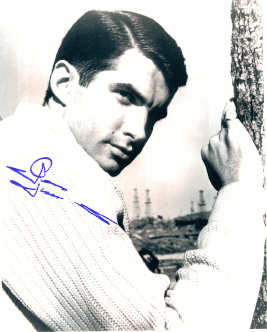
After all, Sandra Dee, like I said, just oozes sex without seeming dirty and who is George Hamilton? He's kinda dreamy:

Ew. Or he was in 1967...do yourself a favor, don't google George Hamilton images...you'll just ruin it for yourself.

Also, there are the costumes! One outfit of a minor player - a secretary, had me mesmerized. And there is a scene where SD dances in a club in high-waisted capri pants and a cropped sweater some little flats and a long bohemian necklace that just made me want to run out and recreate the whole ensemble. (Me to myself: "This is how pants can be so great: they are sexy, sophisticated, relaxed, feminine, modern, and liberated all at once. Also, they make her ass look great.")

Will watch again...just remember to fast forward through the montage of facial expressions that takes the place of an argument in the cab.

Four Stars. Will watch again.

Saturday, September 15, 2007

The Bachelor and the Bobbysoxer (1947)

I watched the WHOLE MOVIE without realizing that the teenage girl is played by Shirley Temple!

She's great. Only very rarely when she says something with a lot of S's, can you detect little curly-head in this pretty, sophisticated and oddly precocious young woman. She makes a good little sister to Myrna Loy, which is high praise in my book.

Myrna Loy and Cary Grant and a great script full of quips and high-speed conversations full of misunderstandings and assumptions and underhanded accusations. Great stuff!

Seven More things to love:
1. stuffed-shirt Assistant District Attorney in a sack race
2. Myrna Loy in outfits with TONS of sequins
3. lovable old uncle who also happens to be a psychiatrist manipulating everyone
4. vocabulary words "sklonklish" and "klunk"
5. lyrics from Labyrinth the movie happen to come up in dialogue
6. cooch dancers get their day in court
7. latin jokes

Do not miss this one! Four stars. Am watching again right now!

Okay and if you must have a plot summary here goes: affable charmer and playful artist Richard Nugent can't keep out of trouble - mostly because of the women who swoon over him wherever he goes. Only levelheaded judge Margaret Turner is unmoved by his charm. Judge Turner's little sister is another story, however, and when she falls for the artist, she falls MADLY in love.

In steps kooky Uncle and court psychiatrist Matt to iron things out - but he has an ulterior motive: to get the emotional artist and the logical judge together and get rid of the stuffy Assistant District Attorney who is Judge Turner's steady beau.

Signed,

A Moderen Singer of Moderen Songs

Monday, September 10, 2007

The Canterville Ghost (1944)

I love Margaret O'Brien! Four stars for her!

The goofy old ghost is good. The young American is brash and awkward all at once. We didn't watch from the beginning, but despite that annoying chipper attitude that makes wartime movies almost unbearable during peace, the story is endearing in its own way.


Charles Laughton, who plays the daffy old ghost, played roles like Dr. Moreau in the Island of Lost Souls and Quasimodo in The Hunchback of Notre Dame. This must have been a nice break for him - to play a silly old man in funny old clothes and the most ridiculous mustache ever.

Will watch again - good one to watch with kids.

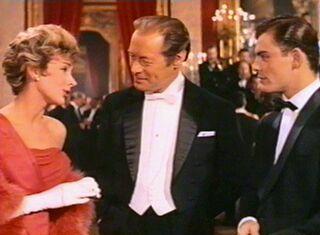
The Reluctant Debutante (1958)

Four Stars. I should dock it a star for the corny jokes and the dialogue and clunkiness of the timing, but I like the ending so much I'm giving it back.


Saw this one a while back and it's adorable. It's not quite the sixties but the same themes apply as in "Yours, Mine and Ours" and "Take Her, She's Mine" - the parents spend a lot of time shaking their heads in dismay at Kids These Days. But at least in this one the parents have their own conniving schemes - with the British Mum determined to get the most noble young man for her new step-daughter.

Sandra Dee in classic Sandra Dee fashion is crazy for a young drummer, despite being introduced to all the nice young society men at the parties of The Season in London she insists on dancing with a member of the band.

It's fun to see that the debutantes are direct descendants of the noble young ladies depicted in historical romance novels - only we're catching an imaginary version of the events as they faded into modern times. Rock'n'Roll was about to blow the waltz out of the water.

In a twist at the end the young drummer turns out to be more noble than the young gentlemen of the ball.

Rex Harrison is very funny as the overprotective father.

This is a favorite, will definitely watch again.

Here Comes the Groom (1951)

I almost missed out on blogging this one!

After the war, a war correspondent exasperates his fiance by staying in France, trying to convince families back home in America to adopt war orphans. She sends him a sort of a Dear John letter bemoaning all the children she should have if they had been married when they should have.

This gives him an idea to surprise her with an orphan.

In the first half hour of the film, the most memorable moment comes when a young orphan girl sings Caro Nome. They just let her sing the whole thing without interruption, and it's beautiful. It doesn't necessarily make some greater point in the movie, but it's moving, and it's something that would never happen in a modern movie, I'm sure. It doesn't feel like a moment too long.

The comedy picks up when you get back to America with Bing, orphans in tow, and learn that our girl back home has left him and it is the eve of her marriage to a blue-blooded millionaire.


Of course that doesn't discourage Bing - the hijinks that follow are partly about the clash of cultures when the humble daughter of a fisherman marries into a family of high breeding. It's more of a send-up of the wealthy than of the working class, but it does play both ways.

In the middle of it all is Bing, using wrestling to loosen up the upper class and bring them down to his level.

This movie is darling and wonderful. Four stars, will definitely watch again!

Wednesday, August 22, 2007

His Girl Friday (1940)

This movie has a scene I have to replay over and over again - Cary Grant chases Rosalind Russel around a desk and she transforms into his lover and partner again. I love this moment. I pretty much love the same moment in all my favorite romantic comedies - call it the "melt moment" it's the moment when one character melts the other's heart, melts through his or her resistance, and...amor vincit omnia, of course!


The Melt Moment - recreated for a still, of course...

It's the moment in Jerry Maguire when she says "you had me at hello" and it's the moment in Pride and Prejudice when they come upon each other unexpectedly - he's disheveled and wet, she's checking out his - holdings. The melt moment is the orgasm of the movie, and a good one can be enjoyed again and again. It's a good thing that DVDs don't wear out like VHS tapes, that's all I have to say.

The brilliant thing about this particular melt moment, though, is that Rosalind Russell's character doesn't even realize that she's melted. She thinks she's just giving in to one more little story...but in reality she's leaving her staid fiance and the life of a housewife in Albany to go back to her ex-husband and the newspaper business she loves.

What makes it great is not that you don't see it coming, it's that you do, and she doesn't, but it's still perfectly obvious that Cary Grant's character knows that he's won her back, and he is happy as only a man who has made his the love of his life return to him can be.

There are many other reasons to love this movie, let's count them!
1. Costumes, hers
2. Newspaper lingo and newspaper lifestyle - journalists were the TMZ of the 1920s so this is a bit like watching "The Springer Hustle" or "TMZ on TV" - except the newspapermen have a tiny tiny bit of integrity and a political angle (they want to get rid of the corrupt mayor).
3. Fiesty lady reporter who doesn't get tame at the end.
4. great character actors in all the little bit parts doing great bits
5. screwball plot twists on the level of A Fish Called Wanda

Five Stars, will watch again and again and again. And so should you.

Tuesday, August 21, 2007

The Women (1939)

Four Stars. Will watch again forever!


Norma Shearer plays a wealthy New York woman who learns that her husband is cheating on her from a gossipy manicurist. Her gossip-loving friend Syliva is played by Rosalind Russell who also stars in "His Girl Friday".

There are so many things to love about this movie. Starting with the opening credits where each character is introduced as an animal first, and then converted to a woman:
Norma Shearer as the Doe ~ Mrs. Stephen Haines (Mary)
Joan Crawford as the Leopard ~ Crystal Allen
Rosalind Russell as the Cat ~ Mrs. Howard Fowler (Sylvia)
Mary Boland as the Monkey ~ The Countess DeLave (Flora)
Paulette Goddard as the Fox ~ Miriam Aarons
Joan Fontaine as the Lamb ~ Mrs. John Day (Peggy)
Lucile Watson as the Owl ~ Mrs. Morehead
Phyllis Povah as the Cow ~ Mrs. Phelps Potter (Edith)
Virginia Weidler as the Fawn ~ Little Mary
Marjorie Main as the Horse ~ Lucy

Virginia Weidler is Dinah in the Philadelphia Story making her the strange precocious young girl in two of my favorite movies.

The movie is also deliciously self-conscious. "I know plenty I wouldn't breathe about my friends' husbands," says one woman, "oh, so do I!" responds another - they both stop talking for a moment and the thought is so clear it doesn't need to be said - what might my friends know about me? A minute later the subject of the juicy gossip, Mary, leaves the room singing "please don't talk about me when I'm gone..." fat chance, Mary.

The funny thing about the movie is it celebrates the epitome of cattiness without letting it triumph in the end...although sexism and classism come out on top. The rich and virtuous triumph over the poor and slutty and the men are proven to be the victims and the women the instigators of all the evils of divorce and adultery. The [Evils of] Women could be the unofficial title of this film.

One of the central morals of the story is that the woman whose husband is cheating on her should stick loyally by his side and say nothing. A man is a man and adultery is just what comes with the territory. She should wait for him to come to his senses (it's okay to wait in Bermuda, for example) - but she most certainly shouldn't let her girlfriends talk her into divorcing him.

"Don't confide in your friends. They'll see to it in the name of friendship that you lose your husband and your home."

So instead the woman in question decides to fight the "other woman" (OW) - not the cheating man. This is in direct contradiction to what Oprah tells us to do! Eventually she caves to the advice of the crowd and finds herself divorced and - naturally - miserable. What's a woman without her man?

There are echoes of The Awful Truth, here - you can leave your spouse, but you will eventually regret it!

Not surprisingly, in the movie we learn conclusively that the man in question is hapless and a little helpless and was lured into the arms of a cunning and conniving woman a "terrible man trap". It's hard not to get enraged while at the same time being amused watching Joan Crawford curl an imaginary man on the telephone around her little finger.

Of course, in real life, ninety-nine times out of a hundred "the other woman" is the hapless-helpless one and the man is cunning and conniving. Or the OW is hapless and desperate and the man is helpless and lying. Or all three parties are hapless, desperate and miserable. Watch Jerry Springer if you need a case in point.

However you slice it, I wouldn't say this movie contains a lesson to be absorbed too deeply. What it can teach you is how to converse with queens. Try these lines for instant success at gay tupperware parties:
About red nails: "Jungle red - looks as if you've been tearing at somebody's throat."
About bread: "Go ahead, dear no starch it's gluten."
About hand towels: "Cheap chinese embroidery - I bet Peggy gave these to her."
About the man trap: "She's got those eyes that run up and down a man like a searchlight."
About adulterous husbands: "Say nothing, and don't forget that's my handkerchief."
About children: "I'm all the baby he wants, toots!"

You'll want to keep your remote handy for this one - and if you don't have Tivo, rent it - there is no possible way a human being could catch all the catty one-liners without rewind or instant replay. And if you love catty one-liners as much as we women do, you will love this movie.

Fire Over Africa (1954) aka "Malaga"

Two stars: one is for Maureen's wardrobe and the other is just for a movie about a femme fatale spy. I wanted to like this a lot more than I did.


A female spy is left out on a limb in Tangier when her only contact with the agency she works for (the OSS, precursor to the CIA) is assassinated. She carries on with her mission while trying to discover who killed her contact. This is the kind of film that leaves you with more questions than answers.

Question 1: Who is MacDonald Carey and why is he the lead in any movie? According to IMDB, he wound up on Days of Our Lives, which is strangely comforting since this movie does nothing to suggest that he is capable of rising above melodrama.

Question 2: Why is an apparently American movie with American stars about an American spy called by the British name in IMDB? And why would they need to change the name to Malaga in the first place when Fire Over Africa is so delightful and meaningless all at once.

Question 3: Why does the hero have to save her in the end? I liked her as the spy who might seem like an arm charm but could fend for herself against some of the nastier characters in Tangiers.

Kim fell asleep during this one and I went out and took a quick dip in the pool while she was dozing. The witty repartee isn't too witty and the plot is hard to follow, even if you care, which I didn't, really.

Maybe I was just too tired for a romantic spy thriller action adventure dramedy.
Will never watch again.

People Will Talk (1951)

Two stars. Might watch again if I was in a the mood.
Strange, a little long but charming in its own way.


CG plays a Patch Adams character - a doctor who is persecuted for his unconventional but successful methods and who has a noble and eccentric character. He gets mixed up with an unwed mother whose pregnancy he will not abort and they fall in love ~ surprise!

Unfortunately for his leading lady, Jeanne Craine, any woman playing opposite this character is just a pretty backdrop to his act. JC played the oldest daughter in the original bitterweet version of Cheaper by the Dozen. Once a martyr, always a martyr, I guess. In Cheaper she sacrifices her future to help her mother support the large family her family-planning-averse parents raised after her eccentric father's sudden and tragic death.

Later, she would go on to play Rose Smith, martyr older sister in a remake of Meet Me in St. Louis - also with Myrna Loy as the mom. In PWT she plays an unwed mother who is willing pay the ultimate price to protect - someone - we're not sure if it is herself, the baby or her poor father.

Anyway, with a nod to her performance, despite my actor-brother's disapproval of same, I think this is Cary's movie. He does a great job playing the charming eccentric - much better than Robin Williams, in my opinion.

The movie has a touch of seriousness to it, which makes for some odd transitions between humor and melodrama, but it is likable just the same, even if not lovable.